Book Club!
One thing that Peace Corps service is known for is a great opportunity to read some books. Whether classic works of fiction or scientific analysis, the best way to spend the sheer amount of free time that you have as a volunteer is with a book in hand. Some of my favorite books in the last few years have been books that look at the nature of life, society, and humanity in different respects. I’ve included five book reviews here with the dates I read each, alongside how I understand them in the context of the Peace Corps.
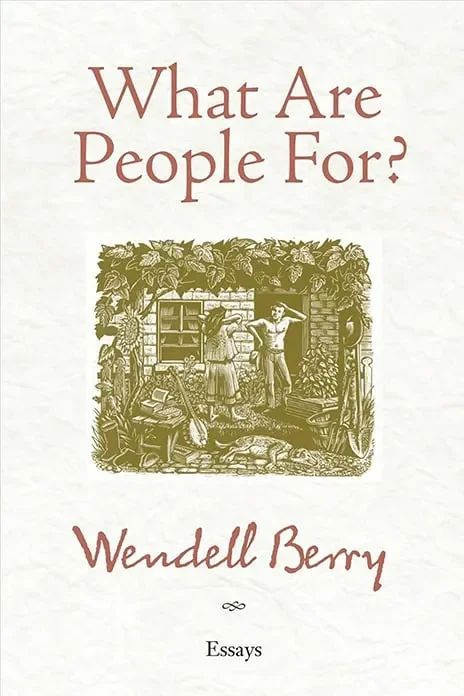
What Are People For? By Wendell Berry (March 2026)
Wendell Berry, writing at the early stages of the Technological Revolution, puts forward several poems, book reviews, and essays to stake out his theory of “the good life”. He focuses lots on the importance of man’s relationship to land, fervently asserts how he’ll never buy a computer, and defends the practice of his wife editing his essays.
Berry makes it easy to yearn for a simpler, less complicated life. Throughout What Are People For? he focuses on an idealized, communal experience grounded upon strong connections to land, family and God. He simultaneously expresses deep concerns for the exploitation of land and cautions against industrial “poisoning of the well”.
What puts this book in my top 5 is the triparted structure: poems, book reviews, and then essays. I think Berry demonstrates how he “knows what he’s about” by framing the book reviews and essays with his poetry: putting the poetry and his critique before his own opinions reinforces his message of spirituality and communal correspondence.
In relating this book to my service, What are People For? asks a question that is probably at the heart of the humanist mission: What are people for? Peace Corps seeks to answer this question by connection and bridging cultures, but there’s a significant piece missing from this answer. I like Wendell Berry’s suggestion: that while community is critical, people are have duty to land and God, and it is important to honor and pay our debts to both. What are People For? has greatly impacted the direction I will take post-service.
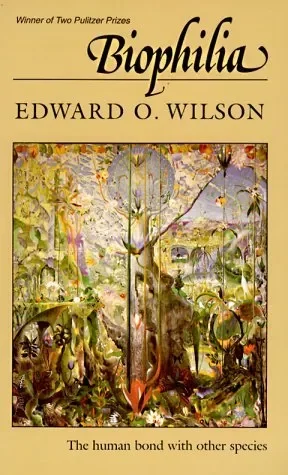
Biophilia by Edward O. Wilson (May 2026)
Another ecologically minded piece of non-fiction: Biophilia is a Darwinian argument for “more life”. Written by Pulitzer-Prize winning myrmecologist Andrew Wilson, the book is, at its core, an argument for loving life.
Sure, most of it is written from the perspective of a man who has spent decades sticking his nose in anthills, but Wilson is still able to strip the case for life down to its humble core and build atop this core a convincing push for engaging with nature on its terms. In a sense, Biophilia creates the opposite emotions compared to most science literature. There is no gentle introduction of scientific principles, or overly technical vocabulary, or complex theory of everything. Wilson just makes the case for life: experiencing it, living it, contemplating it, and trying to understand it.
His writing is also excellent, if occasionally over-wrought. Science communication can be artful, and Biophilia is my current favorite piece.
In relating this book to my service Biophilia is a bold reimagining of the connections that define humanism. Peace Corps is ideologically a humanist program. Building connections and understanding between people from vastly different cultural backgrounds is impossible without a consistent theory of identity that spans religious and geographical barriers. Biophilia outlines that such a theory must remain consistent with natural laws but also offers interesting ways to potentially navigate these areas. It is also just uplifting and life affirming, which is important in difficult or confusing moments.
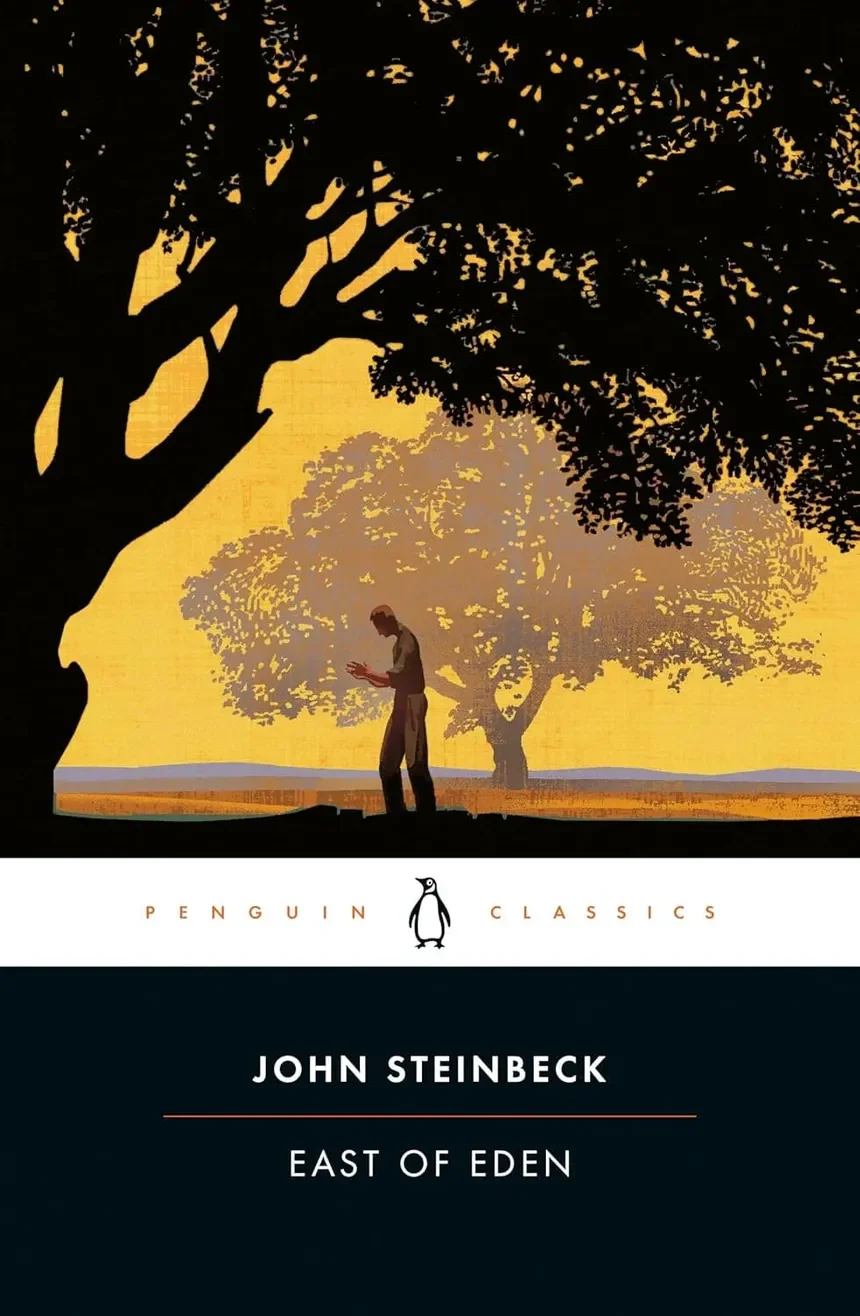
East of Eden by John Steinbeck (July 2026)
I suppose everyone who is reading this was in a ninth-grade English class at some point in their lives, so I won’t hammer home the “symbolism” or “metaphor” of East of Eden.
Steinbeck’s California is a place without God or the Devil. Events unfold methodically, as if they were always going to happen the same way, brothers inevitably fall into the tragedy of Cain and Abel, and old men are always a day too late. Yet Salinas is a place touched by God’s hand. In the first chapter Steinbeck makes this clear, unearthing a biblical archeology of the land, carving its valleys and mountains with flowing sentences and monolithic paragraphs. Characters carry incomprehensible roles that always seem to have existed. Lee is the mystical Eastern butler, Cathy the spiteful Lilith, Samuel the venerable sage. The characters are familiar, probably no matter where the reader is from, but they all feel distinctly from the California valleys.
California really becomes the canvas for an old painting. Nothing has changed in this story, only the people and circumstances. Eternally, man struggles against sin, somewhere East of Eden.
In relating East of Eden to my service, I really am getting ready to return home. East of Eden serves as a good reminder that changing the place doesn’t necessarily change the person, and that the things that one struggles with necessarily follow them regardless of how far they travel. Still, it is also a reminder that people can live good and simple lives, that money doesn’t make one happy, and that hard work is a fine reward.
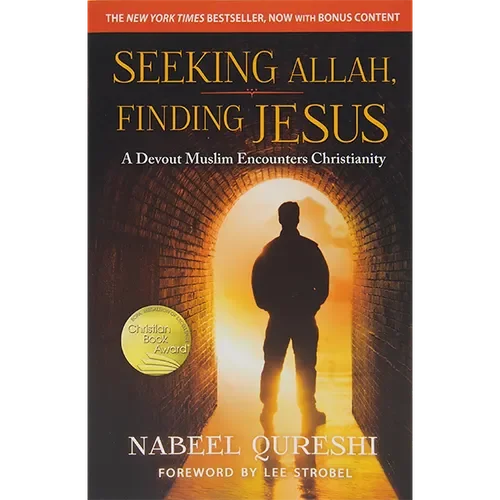
Seeking Allah, Finding Jesus by Nabeel Qareshi (April 2026)
It was either this book or the Quran here, and I feel it would be absurd for me to write a book review of the Quran. Seeking Allah, Finding Jesus is a great testimony of faith. Nabeel Qareshi struggles in a truly Christian testimony of his Muslim upbringing, his falling out with Allah, and his conviction in conversion to Christianity.
What is most notable in this account is the honesty and forwardness with which Qareshi treats both Islam and Christianity. His respect for the Muslim faith never disappears but becomes less and less impressive as he comes to learn about Christian history.
I have found a great deal of affinity for Nabeel Qareshi in his struggle between Christianity and Islam. As I began to immerse myself in Morocco I found myself constantly the subject of ardent Muslims looking to convert a lost soul to Islam. While perhaps the most difficult book to relate directly to my service, the principles of Nabeel’s testimony and Christian apologetics were helpful, guiding, and inspiring.
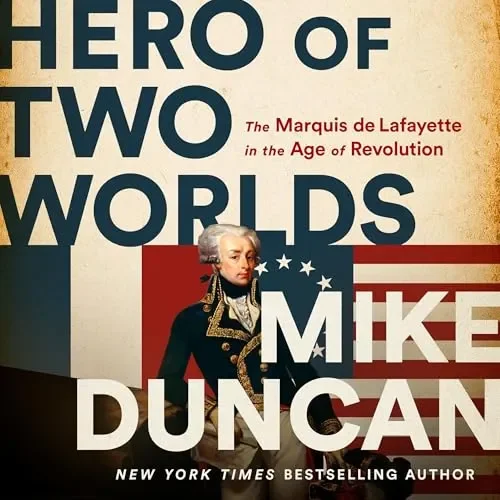
Hero of Two Worlds by Mike Duncan (June 2025)
An excellent historical account of the Marquis de Lafayette, through both the American and French revolutions. Mike Duncan is one of my favorite podcasters, and I was excitedly looking forward to reading this book.
Hero of Two Worlds puts forwards an honest account of Lafayette’s time both in Washington’s Army and later in the French prisons. A lower noble down on his luck, who tricked and schemed his way into the New World, becoming a celebrated diplomat and war hero. The role that Lafayette played in the creation of the United States makes for a thrilling read that was hard to put down.
Unfortunately, the French portion of Lafayette’s revolutionary career was significantly less successful. Full of pain, loss, and suffering, Lafayette pays for his honor and glory in captivity and sickness. Still, an excellent historic biography of a fascinating (French) American icon.
Lafayette is the flipside to the original American diplomat. Whereas Benjamin Franklin becomes the prototypical rough yet charming American abroad, Lafayette is the Princely European experiencing the New World. There is no one to one comparison here with my Peace Corps service, it was just cool to read about Lafayette.
That’s it! I’ve had the chance to read a lot more great books in my two years, but these were some of my favorites. Have you read any? Do any sound like a book you’d enjoy? Let me know!